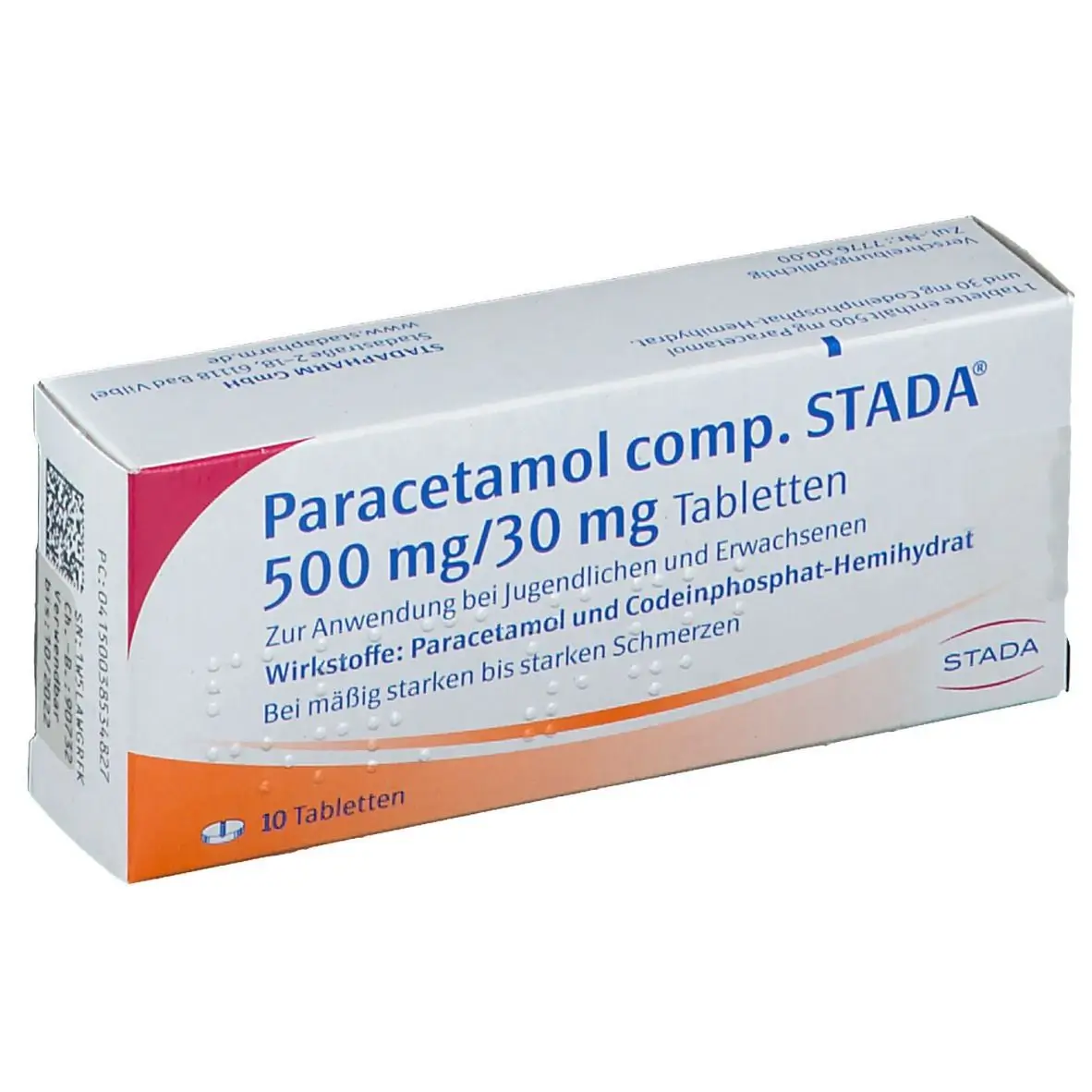
Paracetamol comp. at a glance
Paracetamol and codeine tackle pain at two different points. The combination helps with moderate pain, for example after dental surgery or with back pain. It is important not to take any other paracetamol at the same time.
How the combination works
Paracetamol mainly blocks the development of pain in the brain and reduces fever. Codeine is partly converted into morphine in the body and dampens the transmission of pain signals. Together they work more strongly than either would alone at this dose.
When it is prescribed
Typical reasons are pain after dental treatment or minor surgery, back and joint pain and injuries. It is usually prescribed for a few days or weeks only.
How to take it
Adults usually take one or two tablets or capsules, at least six hours apart. Never take more than eight a day, because the paracetamol could otherwise damage the liver.
Possible side effects
Constipation, nausea, tiredness and dizziness are common. With longer use, the body can get used to the codeine.
Do not take any other medicines containing paracetamol, including cold and flu remedies. Alcohol puts extra strain on the liver and increases tiredness. The combination is not suitable for children under twelve or during breastfeeding.
Who should not take it
The combination is not suitable for people with liver disease, breathing problems, asthma or a history of addiction.
This information does not replace the package leaflet or advice from a doctor or pharmacist.